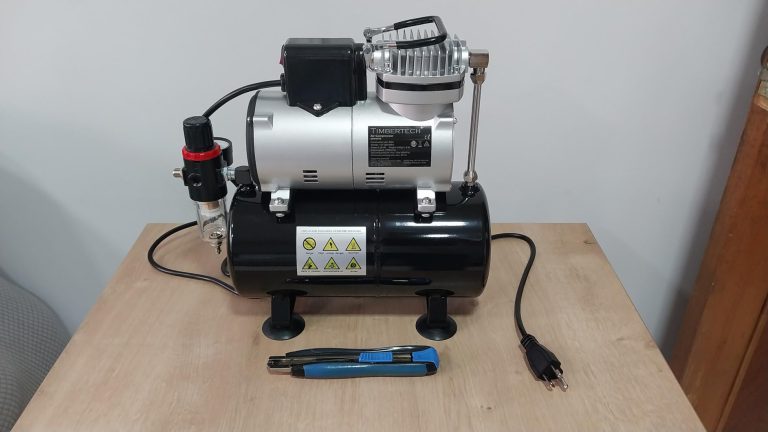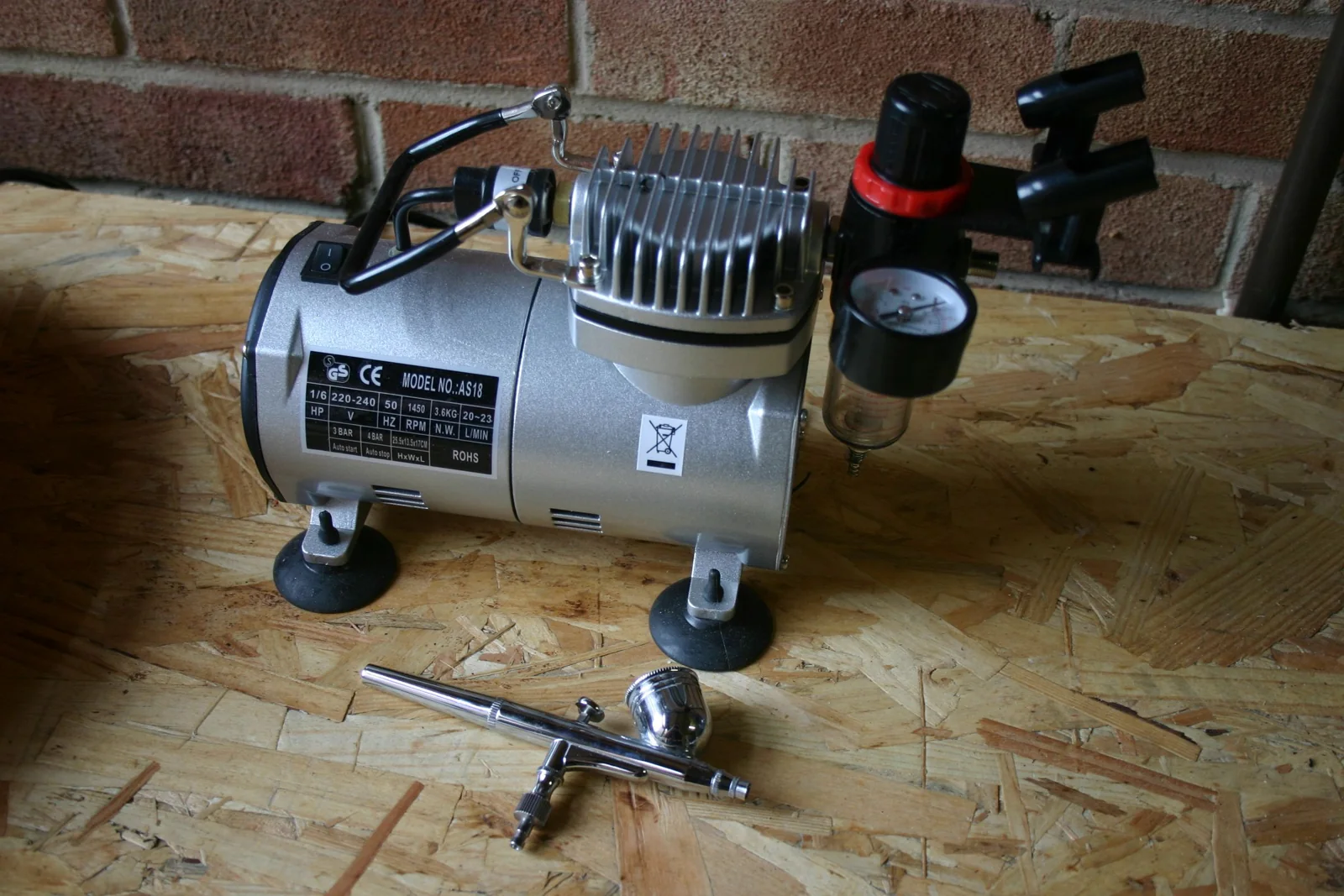
Which pressure problem do you have?
A compressor may show tank pressure and regulated outlet pressure on separate gauges, or have only one gauge. Tankless units have no receiver pressure to check. Identify what your gauge measures before treating a low reading as a pump fault.
Scroll sideways to see all columns
| What you see | What it suggests | First checks |
|---|---|---|
| No pressure from a cold start | Air escaping, a gauge or regulator issue, or a pump not delivering | Normal drain closed, gauge units, regulator setting, audible leaks |
| Tank pressure holds, but outlet pressure is low | Regulator or downstream issue rather than tank supply | Regulator lock and adjustment, moisture trap, hose, fittings |
| Pressure falls only while air runs | Expected working drop, a restriction, or demand the compressor cannot sustain | Read the gauge during an air-only trigger press and watch recovery |
| Pressure falls with no air being used | Leak somewhere in the system | Drains, quick disconnect, fittings, careful soap check |
| Motor stops when hot or will not restart | Full-tank auto-stop, power issue, or thermal protection | Tank gauge, outlet and switch, cooling time |
Some drop between static pressure (no air flowing) and working pressure (air flowing) is normal. Read working pressure while air is flowing through the airbrush. The problem is pressure that falls to a level you cannot paint with, or a compressor whose recovery never catches up.
Check the gauge, units, and regulator
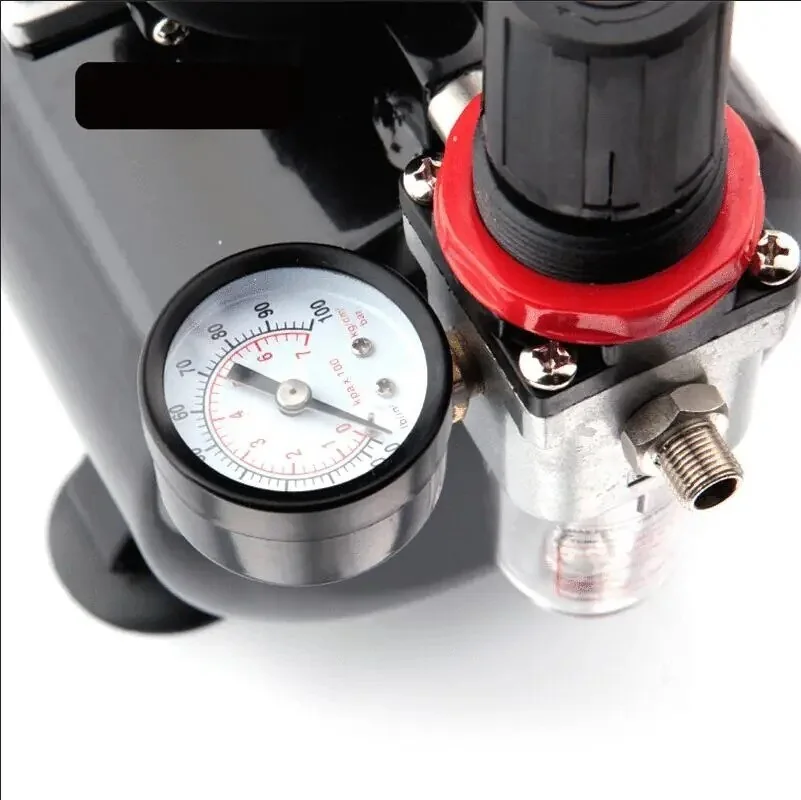
Check the units first. One bar is about 14.5 PSI, so a needle at 4 on a bar scale is not 4 PSI. Some regulator gauges show both scales, and it is easy to read the wrong ring.
Next, look at the regulator. Many regulators have a knob that must be pulled out or unlocked before it turns, while others turn freely. This varies by model, so check your manual rather than forcing the knob. If tank pressure is present but the outlet gauge stays at zero, check the regulator setting and the downstream air path. Unlocking the knob only permits adjustment; it does not itself open the air supply. A stuck or damaged gauge is another possibility if usable air is reaching the brush, so note both the reading and actual airflow.
Pressure drops when you press for air
To check working pressure, press the trigger for air only. On a dual-action brush, do not pull back for paint. Watch the regulator gauge while air flows.
What you see depends on the design:
- Tankless compressors feed air more or less directly from pump to brush, so some fluctuation during spraying is expected.
- Compressors with a receiver keep the tank above the regulator setting. The regulator should then hold closer to its set point until the tank falls far enough for the pump to restart.
A tank smooths pulses and stores some air. It does not increase how much air the pump can deliver over time. If the brush or task needs more sustained airflow than the pump makes, the tank will eventually drain toward the pump’s limit. That is a capacity mismatch, not necessarily a fault. Compare the compressor’s delivered airflow at the required working pressure with the demand of the airbrush. Maximum PSI alone does not show how much air it can supply during continuous spraying.
If the pressure used to hold and now collapses during the same air-only press, something has changed. Move on to leaks and restrictions.
Find a leak or blocked air path
Before reseating a coupler, loosening a fitting, or adjusting a drain, switch off, unplug, and release stored pressure through the normal operating path. Use the model-specific method for draining the tank. Then check the outside components in this order:
- Check the normal tank drain. An open drain can release enough air to prevent pressure building. Do not confuse the tank drain with the moisture-trap drain on the regulator filter bowl. On the common manual-drain hobby setup, both are closed during normal operation. They are separate parts. A safety relief valve is a third, different part. Do not force it, tape it, or plug it.
- Seat the quick disconnect. A partly engaged coupler can leak or restrict flow.
- Check the air path. Look for a partly closed inline valve, a kinked or crushed hose, a coupler that is not fully seated, or a clogged filter. A restriction can leave pressure available upstream while starving the airbrush during spraying.
- Soap-test pneumatic joints. Dab a little soapy water onto an accessible air fitting and look for bubbles that grow while the line is pressurized. Keep liquid away from the motor, switch, and wiring. If the hose leaks through its wall, replace it rather than relying on a tape patch.
Do not block the output with a finger to test it, or raise the pressure-switch setting to compensate for lost pressure.
If the receiver pressure keeps falling and the motor repeatedly restarts with no air being used, look for a leak. A brief shutdown release on a design that uses an unloader is a different pattern.
The motor runs but pressure will not build
Motor noise only tells you the unit is running. If neither tank nor working outlet pressure rises, check for an open drain, a substantial external leak, or an unavailable air supply before assuming that rotation means the pump is healthy.
Some tankless designs vent air as part of bleed regulation. Some tank systems use an unloader that briefly releases trapped pump-side pressure when the motor stops. These are different mechanisms. Locate a continuing hiss and watch the gauge instead of diagnosing a fault from the sound alone.
If both gauges remain low after the external checks, an internal valve or seal fault is possible, but the readings do not identify which part has failed. A closed outlet regulator alone should not stop an independently measured tank pressure from rising. Record the symptoms and seek model-specific service rather than buying a regulator or pump on a guess.
It will not restart or stops when hot
If the compressor will not start, check the obvious first. An auto-stop compressor may simply have reached its cut-out pressure and be waiting for air demand. Tankless models can also have auto-stop, so a quiet tankless unit is not automatically broken. Power problems and thermal protection are the other common reasons.
Thermal protection shuts the motor off when it overheats. If that happens, let it cool fully before trying again, and do not cover vents or run it inside a closed cabinet. There is no universal duty cycle or cool-down time for hobby compressors, so check your model’s specifications. If the compressor restarts after cooling but still will not build pressure, note that separately. It is more useful to a technician than “it overheated.”
When repair or replacement makes sense
A small oil-free compressor can lose output through internal valve, seal, or pump wear. Which parts can be serviced depends on the model. Once external checks are exhausted, the next step is a model-specific repair assessment, with the pump and tank left assembled.
If the compressor is under warranty, contact the maker or seller before opening anything, since disassembly may affect coverage. Outside warranty, I weigh the cost of an authorized repair or a documented parts kit for that exact model against replacement. If the pump never delivered enough air for your brush, a repair will not change that, and a higher-capacity compressor is the more honest fix.
What to record before contacting support
Collect this before you call or email:
- Exact model and, if there is one, the serial number.
- Which gauge shows the problem: tank, regulator, or both.
- Units on that gauge, bar or PSI.
- Idle behavior: what the gauge reads with no air flowing, and whether it slowly falls.
- Flow behavior: what it reads during an air-only trigger press, and whether it recovers.
- Leak location, if the soap check showed bubbles.
- Air-path checks: coupler seating, hose condition, inline valves, and filter condition.
- Heat behavior: whether it shut down hot, restarted after cooling, and built pressure afterward.
With those details, support can usually tell a setting issue from a leak, a capacity mismatch, or a pump fault much faster than from “it won’t build pressure.”