I group these seven options by the jobs they suit: learning trigger control, painting most of a miniature with one tool, or covering larger surfaces. Compare the nozzle setup, cleanup and spare parts before choosing.
Quick Pick by Task
Mostly priming, basecoating, and learning trigger control: Harder & Steenbeck Ultra 2024. It has a Start Control dual-action trigger meant to guide technique and a five-step Colour Control that limits how far the trigger draws back. The head lets you reach the needle tip for cleaning while keeping it guarded. Harder & Steenbeck lists a 0.45 mm headset and spare parts for this model. A setup like this makes sense if your first goal is smooth primer and base layers on figures and terrain. It doesn’t mean the Ultra 2024 can’t do detail work.
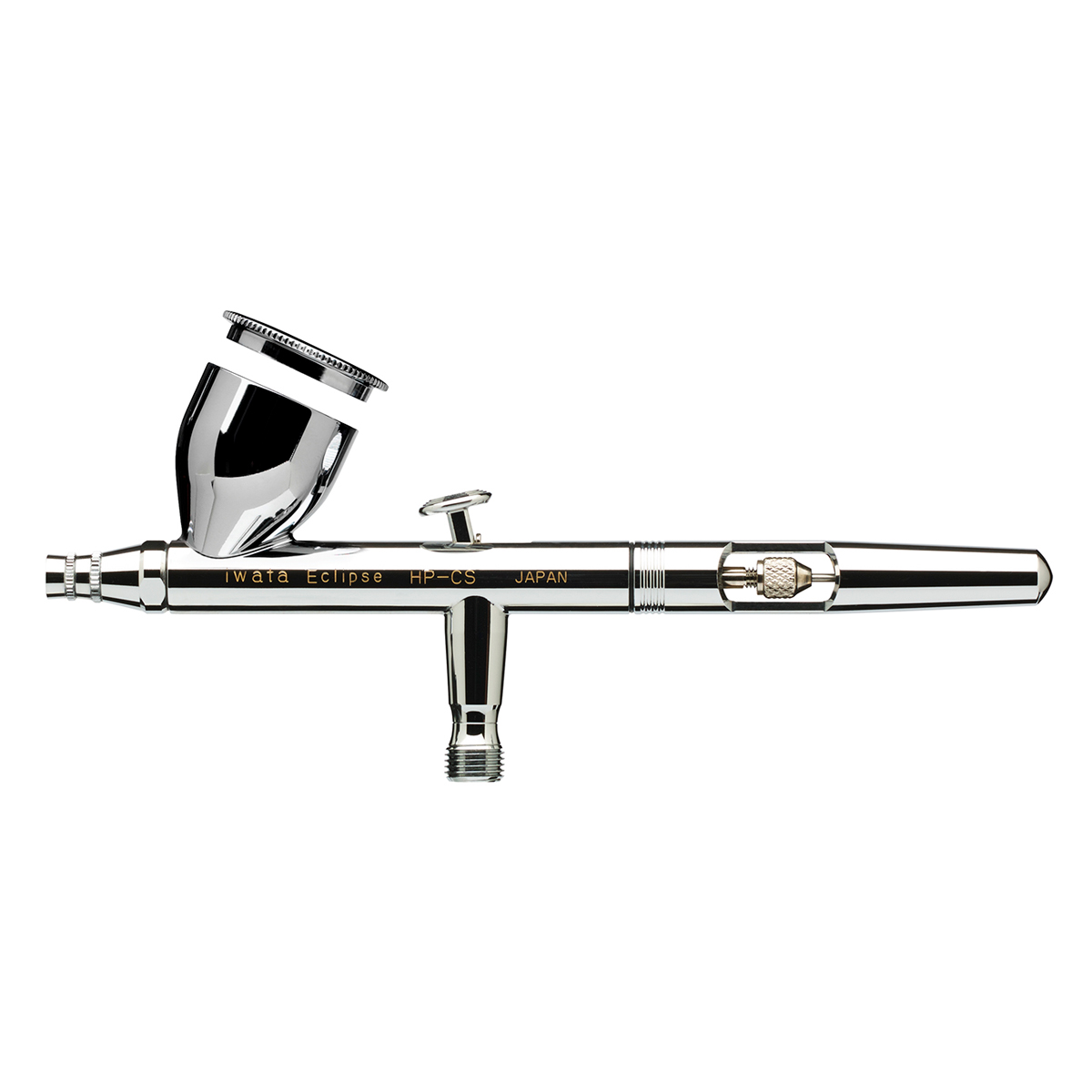
One flexible tool for minis and scale models: Iwata Eclipse HP-CS. The Eclipse HP-CS is a gravity-feed dual-action airbrush with a 0.35 mm standard setup and a 7 ml cup. The Eclipse CS uses a compression-fit nozzle assembly that stays together when you remove it, which can make reassembly easier to understand. It’s a reasonable candidate if you want one airbrush for both figures and larger scale model surfaces. As with any airbrush, results depend on your paint, thinning, pressure, and practice.
An entry option if the total cost is lower: Iwata NEO CN. It’s a gravity-feed dual-action airbrush with interchangeable cups. Consider it if it costs less where you shop and you can confirm that spare parts are easy to get locally. Before you buy, check the current specifications on the manufacturer’s page rather than relying on secondhand listings.
Four more options worth comparing
Master Airbrush G233: A useful budget candidate if you want to try matched 0.2, 0.3 and 0.5 mm setups on one body. I would consider it for learning how paint flow changes between jobs. If you mainly prime batches, the extra sizes may be less useful than putting the budget toward a regulated compressor. The airbrush set itself is not a complete painting station.
Gaahleri GHAD-39: The supplied 0.35 and 0.5 mm setups make sense if you want one body for general painting and broader primer passes. Interchangeable cups let you choose how much paint to load. Changing jobs still means cleaning and swapping the matching front parts; this is not as quick as keeping a second airbrush ready.
Badger Patriot 105: The 105-1 Fine uses a 0.5 mm setup, making it a practical candidate for primer, basecoats and larger model surfaces. I would shortlist it when those jobs take up most of a session. Allow for a Badger-compatible hose or adapter, and compare the total setup cost. It is less compelling as a second purchase if your current brush already covers these broad jobs comfortably.
Harder & Steenbeck Evolution 2024 CRplus 2-in-1: The 0.28 and 0.45 mm setups suit someone who already knows they want both finer transitions and broader coverage from one body. The two-in-one version also includes 2 ml and 5 ml cups. If you mainly prime and basecoat, I would first make sure the compressor and paint preparation are sorted before paying for a more flexible head setup.
Compare the seven options
Scroll sideways to see all columns
| Model | Documented specs | Notable design points | Good fit for |
|---|---|---|---|
| Harder & Steenbeck Ultra 2024 | 0.45 mm headset | Start Control trigger, five-step Colour Control, guarded needle access | Learning trigger sequencing, priming, basecoating |
| Iwata Eclipse HP-CS | 0.35 mm standard setup, 7 ml cup | Compression-fit nozzle assembly stays together when removed | One flexible tool for minis and scale models |
| Iwata NEO CN | N3 head system, 7 ml and 3 ml cups | Removable cups; 8–20 PSI optimal working range | A budget start where parts are locally available |
| Master Airbrush G233 | 0.2, 0.3, and 0.5 mm sets | Check the exact bundle | Trying several nozzle sizes on a budget |
| Gaahleri GHAD-39 | 0.35 and 0.5 mm sets | Interchangeable cups | General work and larger surfaces |
| Badger Patriot 105 | 0.5 mm Fine setup | Check hose fit and parts | General work with local spares |
| H&S Evolution 2024 CRplus 2-in-1 | 0.28 and 0.45 mm sets | Two setups in the 2-in-1 package | Detail and broader passes |
How Dual-Action and Gravity Feed Work
All seven options are dual-action airbrushes. I press the trigger down for air, then pull it back for paint. Holding air flow separate from paint flow is what gives you control over line weight and coverage. It’s also why a trigger with built-in guidance, like the Ultra 2024’s, can help beginners.
Gravity feed means the paint cup sits on top and paint flows down into the airbrush. That works well when you only need a few drops for a miniature.
Setup Cost Checklist
The airbrush is only part of the cost. Before you commit, list every piece you’ll need and check local prices for each:
- Airbrush. One of the candidates above, or another model with clear documentation.
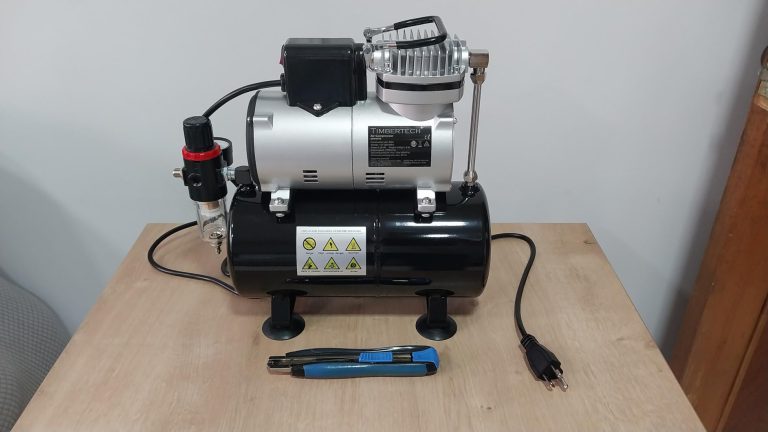
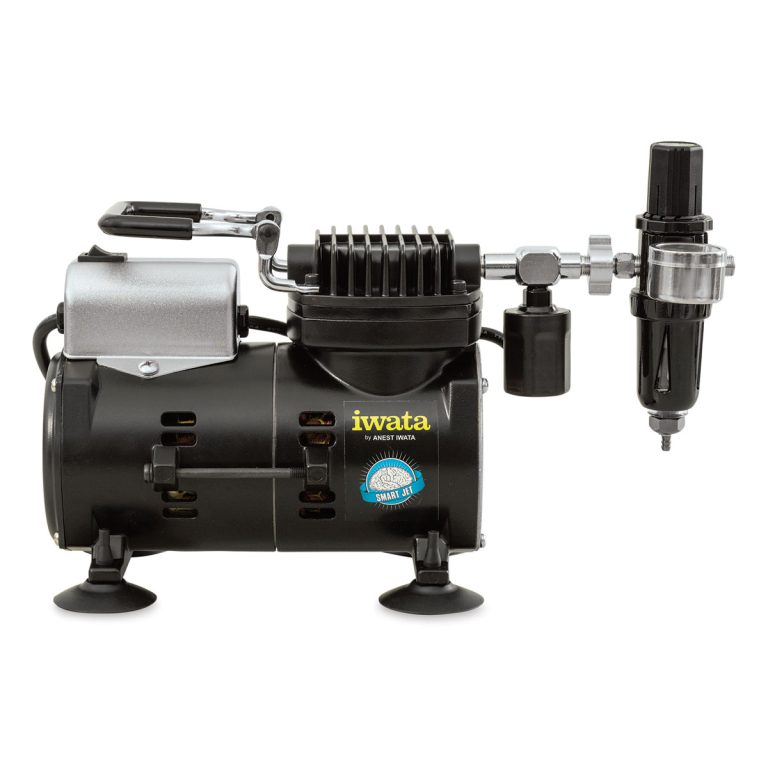
- Compressor. The compressor is often a large share of the total budget, so plan for it from the start.
- Air hose. It must match the fittings on both your compressor and your airbrush.
- Adapters and fittings. You may need these if the hose and airbrush threads don’t match.
- Moisture trap and pressure regulator. Many compressors include them, so check what yours comes with.
- Airbrush holder or stand. This gives the airbrush somewhere safe to rest between passes.
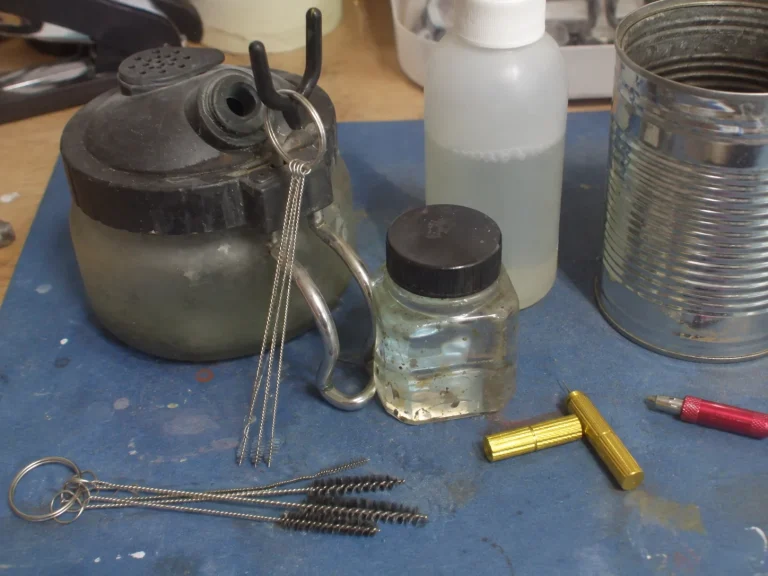
- Cleaning supplies. You’ll need airbrush cleaner, a cleaning pot, small brushes, and lint-free cloths.
- Thinner and flow aids. Choose ones compatible with the paints you use.
- Ventilation and respiratory protection. Budget for equipment appropriate to the paint you spray.
- Spare parts. Needles and nozzles get bent or cracked, so check spare availability before you buy.
If you’re unsure about investing right away, use this checklist to work out the real total cost. A cheaper airbrush may not save much once you add the compressor and accessories.
For complete packages and what they leave out, compare airbrush starter kits for miniatures. If you already have a brush, choose the compressor separately.
Parts and Fittings to Check Before Buying
Several practical details matter as much as the airbrush itself:
- Cup volume. A small cup suits detail work and small batches. A larger cup, such as the Eclipse HP-CS’s 7 ml, reduces refills when priming larger surfaces.
- Local spare parts. Needles and nozzles wear out and get damaged. A model you can’t find parts for locally will sit unused when something breaks. I look for the exact replacement needle and nozzle before ordering.
- Nozzle design and cleaning. I check how the nozzle comes out and what tools it needs. On the Eclipse HP-CS the compression-fit nozzle comes out as a unit. Regular cleaning helps keep dried paint from interrupting the spray.
- Hose and thread fittings. Compressors and airbrushes don’t always use the same thread standard. Confirm the hose ends match before you assemble the setup, or buy the right adapter.
Do You Need a Smaller Nozzle for Minis?
Usually not, at least not for a first setup. Most airbrush work on 28 mm miniatures is priming, basecoating, zenithal highlights, and smooth transitions. A general-purpose nozzle handles these jobs. The Eclipse HP-CS’s 0.35 mm standard setup and the Ultra 2024’s listed 0.45 mm headset are both sized for that kind of work, and the 0.45 mm works well for primer and basecoats on figures and terrain.
A dedicated fine-detail airbrush becomes worth considering once you’ve learned thinning and pressure control and keep running into a specific limit, such as very tight freehand lines. Many fine-line problems come from paint consistency, pressure, and distance rather than nozzle size. If you want flexibility later, check whether your chosen model has alternative nozzle and needle sizes available as spares before you buy.
The needle size guide explains when a different matched setup helps and when technique matters more.