Quick choice
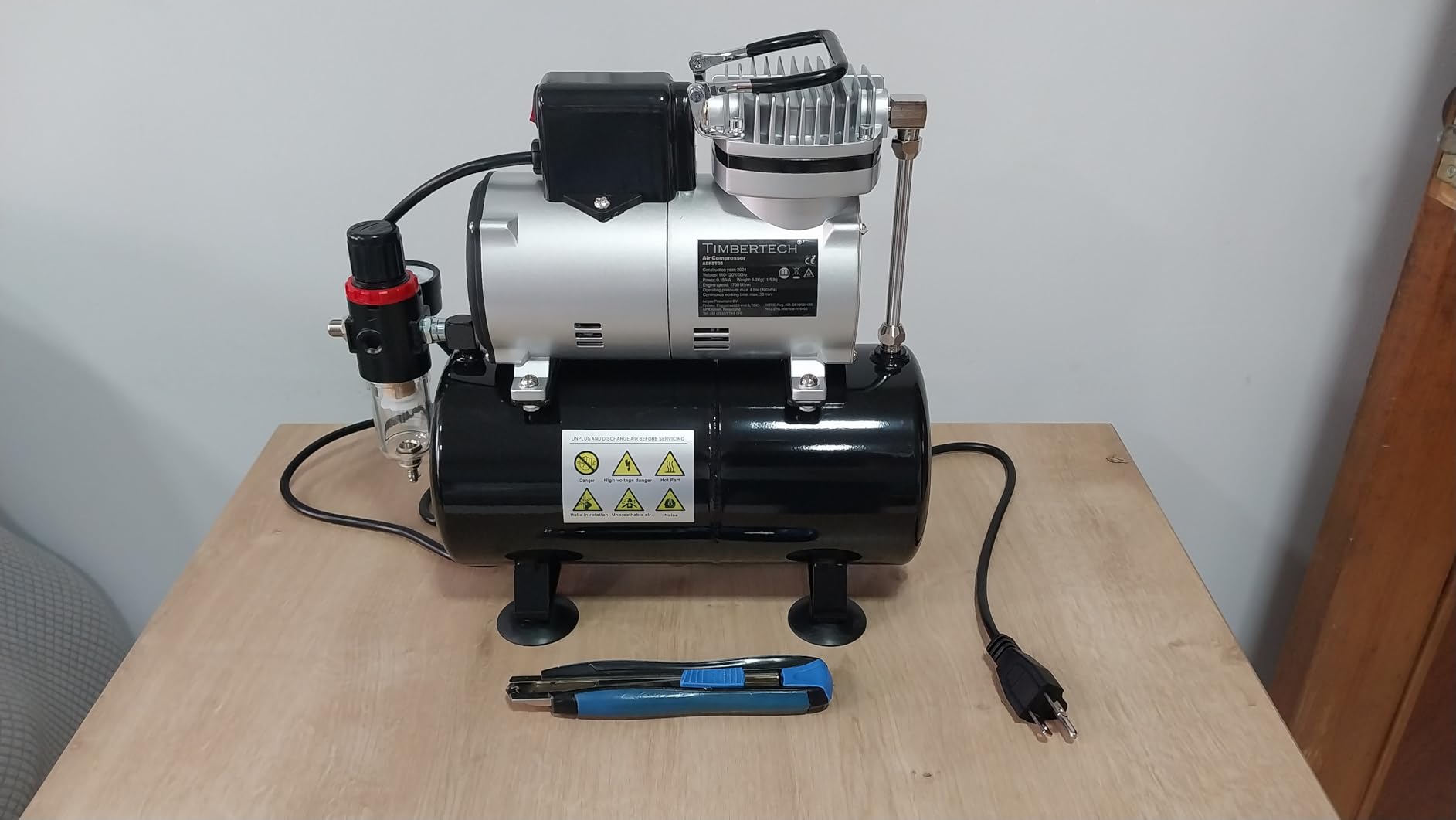
If I were setting up a permanent painting corner, I would start with a 3L tank model such as the Master TC-326T or Timbertech ABPST08. If I wanted to keep two airbrushes connected, say one for primer and one for detail, I would look at the Sparmax TC-620X with its two outlets.
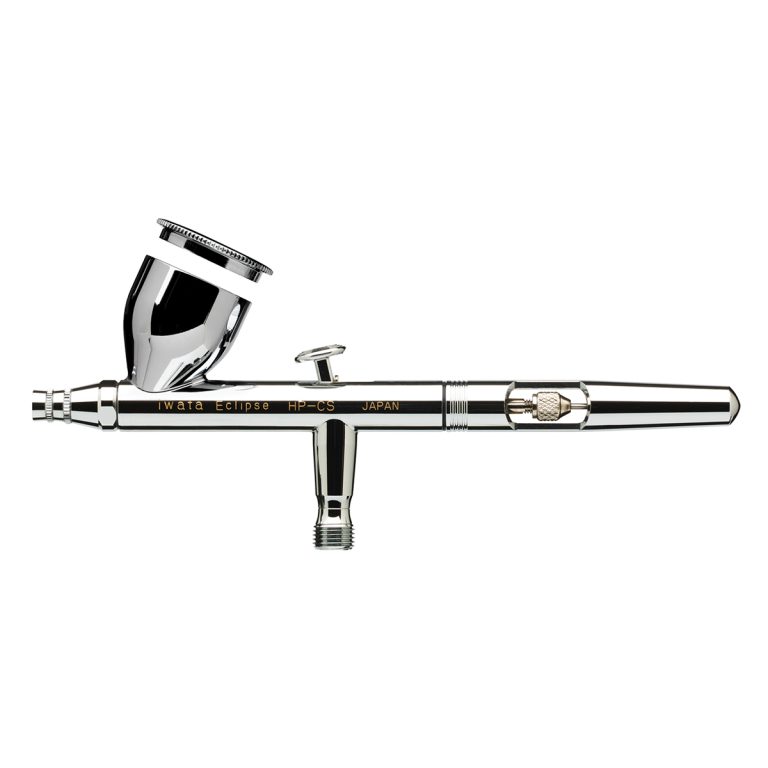
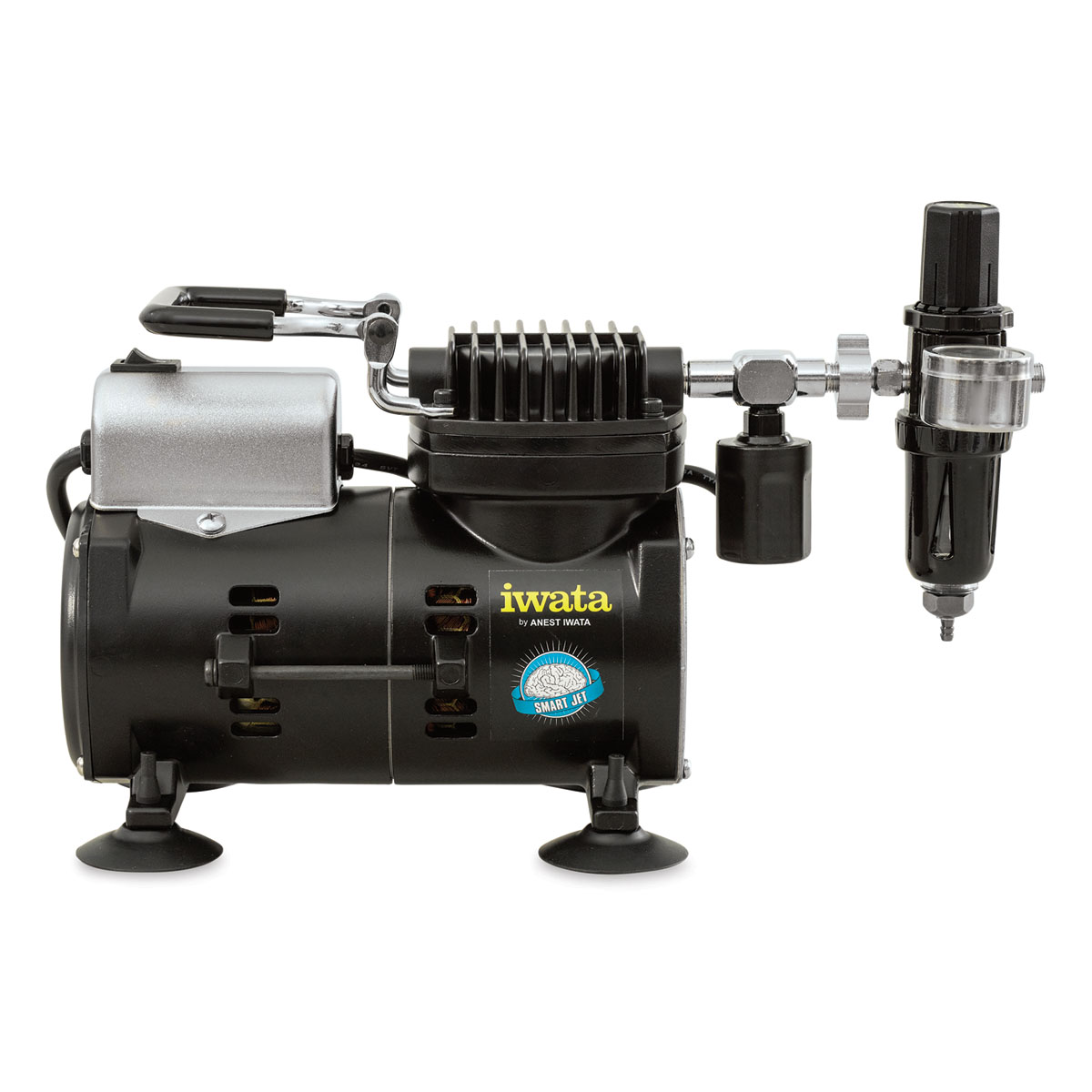
If space or travel is the priority, a compact tankless model like the Iwata Smart Jet is worth comparing. If you have no airbrush yet, compare compressor-only listings against full kits before you buy, because the kit and the bare compressor are often different products with similar names.
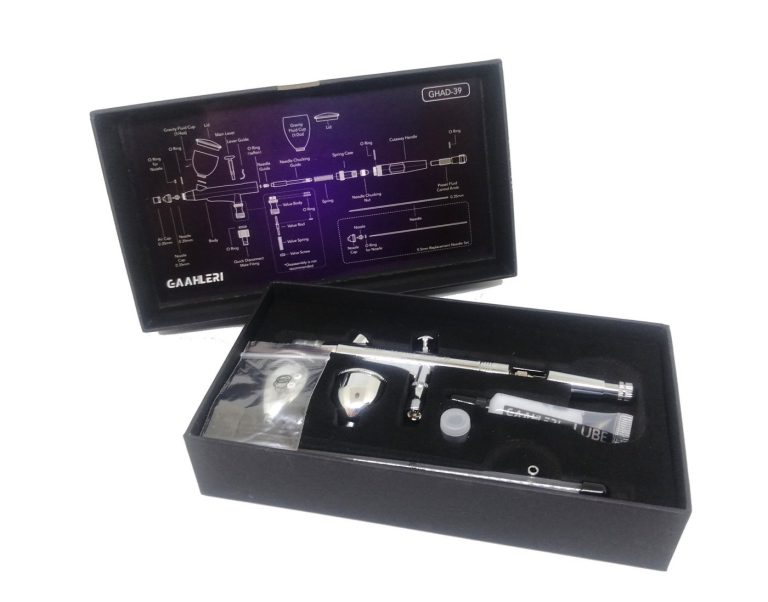
If you need both the brush and the air source, compare the complete starter packages before ordering a compressor-only listing.
Seven options by task
I compare these options by the setup they suit.
Scroll sideways to see all columns
| Setup need | Option | Tank | Notable features | Check before buying |
|---|---|---|---|---|
| Fixed desk, steady air | Master TC-326T Cool Runner II | 3L | Two cooling fans, regulator, moisture trap, auto on/off | Don’t confuse it with the tankless TC-320 |
| Starting from zero with a kit | Master TC-320 Cool Runner II kit | None | Bundled with three airbrushes and paint accessories | Verify the exact bundle contents |
| Fixed desk, compressor only | Timbertech ABPST08 | 3L | Fan, regulator, moisture trap | ABPST08K is a separate complete kit |
| Retailer support and bundles | NO-NAME Cool Tooty | 3L | Tank unit sold with bundle choices | Compare against generic 3L tank units |
| Compact general use | Iwata Smart Jet IS850 | None | Auto shutoff, adjustable regulator, moisture filter | Older versions used a bleed-style regulator |
| Higher-output tankless option | Iwata Power Jet Lite IS925 | None | Auto shutoff, adjustable regulator, filter, protective case | Check its size, weight, and output for your brush |
| Two brushes connected | Sparmax TC-620X | 2.5L | Dual cylinder, two outlets, regulator, moisture filter, US 110V/60Hz | Two outlets mean easy switching, not guaranteed simultaneous use |
A few notes on how I’d read that table:
- TC-326T vs TC-320: the names are close and both carry the Cool Runner II label. The 326T has the tank. The popular TC-320 kit listing is tankless, so it is a kit decision more than a tank decision.
- Timbertech ABPST08 vs ABPST08K: the “K” version is a complete kit, not a second compressor model. Buy the one that matches whether you already own an airbrush.
- Cool Tooty: the reason to compare it is the retailer behind it, with support and bundle selection, rather than any unique hardware claim.
- Iwata Smart Jet: inspect the exact version you are offered. The current model lists an adjustable regulator, while older versions used a bleed regulator design.
- Sparmax TC-620X: having two outlets lets you switch brushes without unplugging hoses. Whether two brushes can run at once depends on the pressure and the brushes, so I wouldn’t count on it.
Tank, regulator and airflow
A tank is a buffer. It smooths pulsing from the pump and lets the motor rest between cycles, which can reduce how often the motor needs to start during short passes. What a tank does not do is increase the pump’s capacity. If the pump can’t keep up with your airbrush at your working pressure, a tank only delays the moment it falls behind.
If your existing compressor runs but cannot build pressure, work through the checks before choosing a replacement.
Auto shutoff is also not a tank. A tankless compressor with auto shutoff stops the motor when you release the trigger, which is handy, but it still has no stored air to even out delivery.
The regulator is what sets your painting pressure, and it should be adjustable. A gauge alone only tells you a number. Read working pressure with air flowing through the airbrush, not with the trigger closed, because the reading can fall when the air starts moving.
Be careful with spec sheets. Maximum tank pressure and free-air LPM figures don’t prove how much air the unit delivers at the pressure you paint at. The useful match is between your airbrush’s continuous air needs and what the compressor sustains at that working pressure. If your brush is gravity-fed like many common miniature brushes, check its recommended range and compare that against the compressor’s sustained output, not its peak numbers.
A moisture trap matters more than it sounds. Water in the line can spit onto a finished face or cloak. Drain accumulated water as needed. Before opening a tank drain or removing a pressurized fitting, turn the compressor off and release the stored pressure.
Use working PSI with air flowing when checking your setup, rather than treating maximum tank pressure as painting pressure.
Noise and buying checks
Noise is the most common worry for painters in shared homes, apartments or late-night sessions. Published decibel figures are rarely measured the same way, so I wouldn’t treat them as a reliable comparison between brands. A tank helps indirectly, since the motor can cycle off while you paint, and features like cooling fans support longer runs. If you’re searching for a quiet airbrush compressor for miniatures, I’d prioritize a tank model with auto on/off and use a stable vibration-isolating mat that leaves the cooling vents clear.
My checklist before buying:
- Compressor only or kit? Match the listing to the exact model number.
- Tank or tankless? Desk work favors a tank. Travel favors compact tankless.
- Adjustable regulator and moisture trap included?
- US voltage: confirm 110V/60Hz.
- Airflow at working pressure, not just max pressure.
- Hose fittings that match your airbrush, or a confirmed adapter.
- Seller support, since local help and parts availability matter when something leaks.