Scroll sideways to see all columns
| What you see | What to check first |
|---|---|
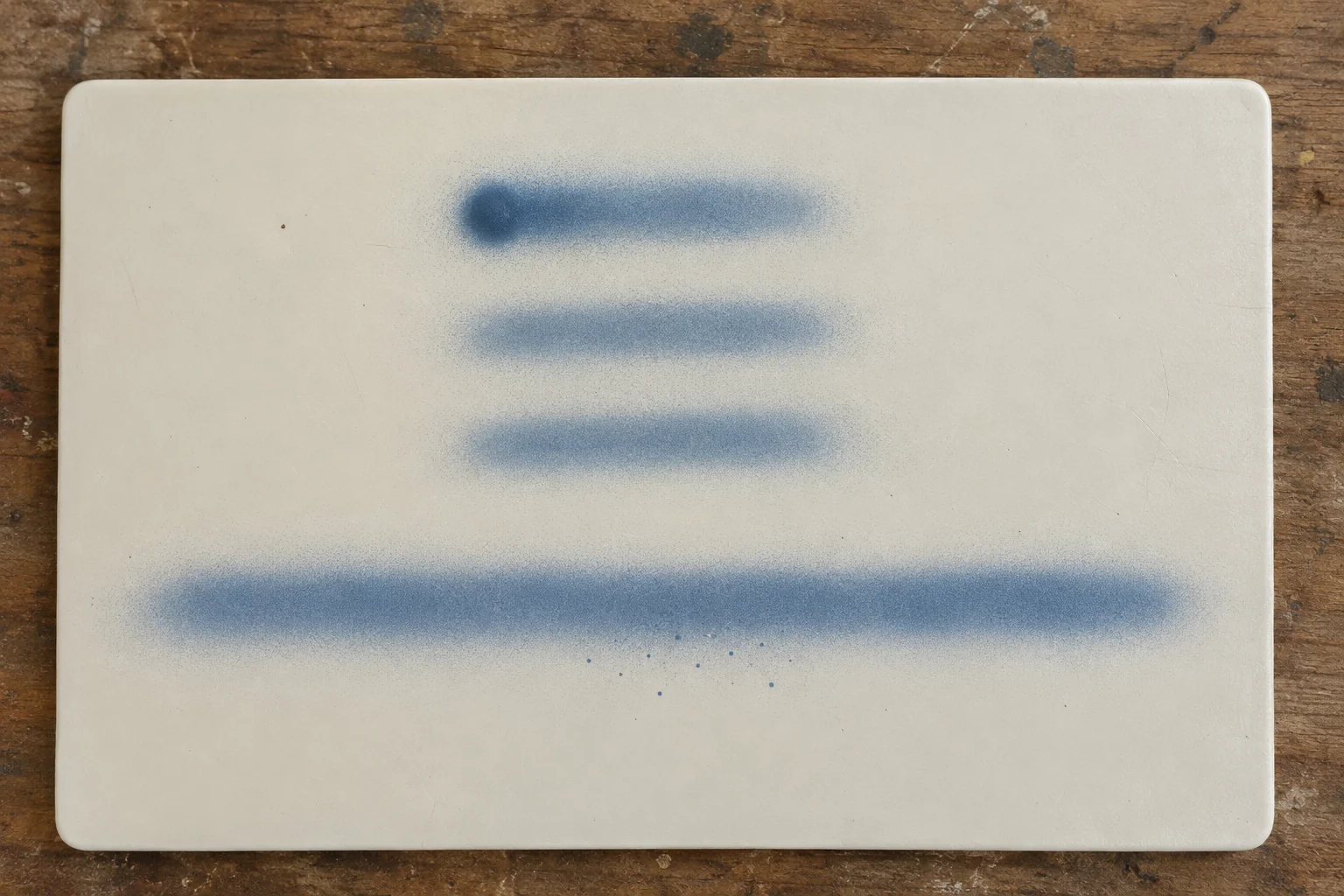
| A single blob at the start, then a smooth line | Paint on the needle tip or inside the cap, then trigger timing |
| Specks or bursts in the middle of the line | Dried paint at the tip, then a spray test with clean water for water-based acrylics |
| Clear drops when you’re trying to spray only air | Leftover rinse water, then moisture in the air supply |
| A wet spot that spreads into thin legs | How much paint you’re laying down in one spot |
One blob at the start
I turn off the air and look for paint on the exposed needle tip and inside the cap. If I find buildup, I wipe it away gently with a swab dampened with a cleaner that suits the paint. Then I repeat the short strokes with the same settings and trigger timing. If the blob is gone, there’s no reason to change the mix or pressure.
If it still spits, I test the trigger sequence on its own. On a standard dual-action airbrush, press down for air, pull back for paint, move the trigger forward to stop the paint, and then lift your finger to stop the air. Try a few short lines this way. Stopping the air too early can leave paint at the tip for the next burst to carry out. If the blob persists with a clean tip and deliberate trigger timing, check the nozzle as described below.
Specks or bursts during a pass
Start with the same tip and cap check. If the spray still sputters, flush the brush. For water-based acrylics, spray a little clean water at the same working pressure and compare the pattern.
If water sprays evenly, start with the paint and working pressure. Look for clumps, check that the thinner matches the paint, and try a small adjustment to the mix if it seems too thick. To test pressure separately, watch the regulator gauge with air flowing. If the pressure is steady but the paint still comes out in coarse droplets, try a small increase while keeping the mix the same. Compare a test line after each change. Water can still pass through a partly blocked nozzle, so come back to the nozzle if those changes don’t help.
If water also sputters, check the air supply and nozzle before adjusting the paint. Watch the gauge with the air flowing. If the pressure drops and keeps falling or swings as the spray breaks up, check the compressor, regulator, hose, and connections. If the air seems steady, inspect the nozzle for residue or damage.
For repeated interruptions, separate tip dry from an internal blockage before changing the paint again.
Clear drops with an empty cup
Empty the cup and spray out any leftover rinse water or cleaner. Then hold the trigger down for air without pulling back for paint. If clear drops keep appearing with the cup empty, check for condensation in the moisture trap and airline.
If there’s water in the trap or tank, drain it as directed for your compressor. Switch the compressor off and release the pressure before opening the tank drain.
Wet paint spreads into legs
If the spray looks even until the paint hits the surface and runs outward into thin legs, that’s spidering.
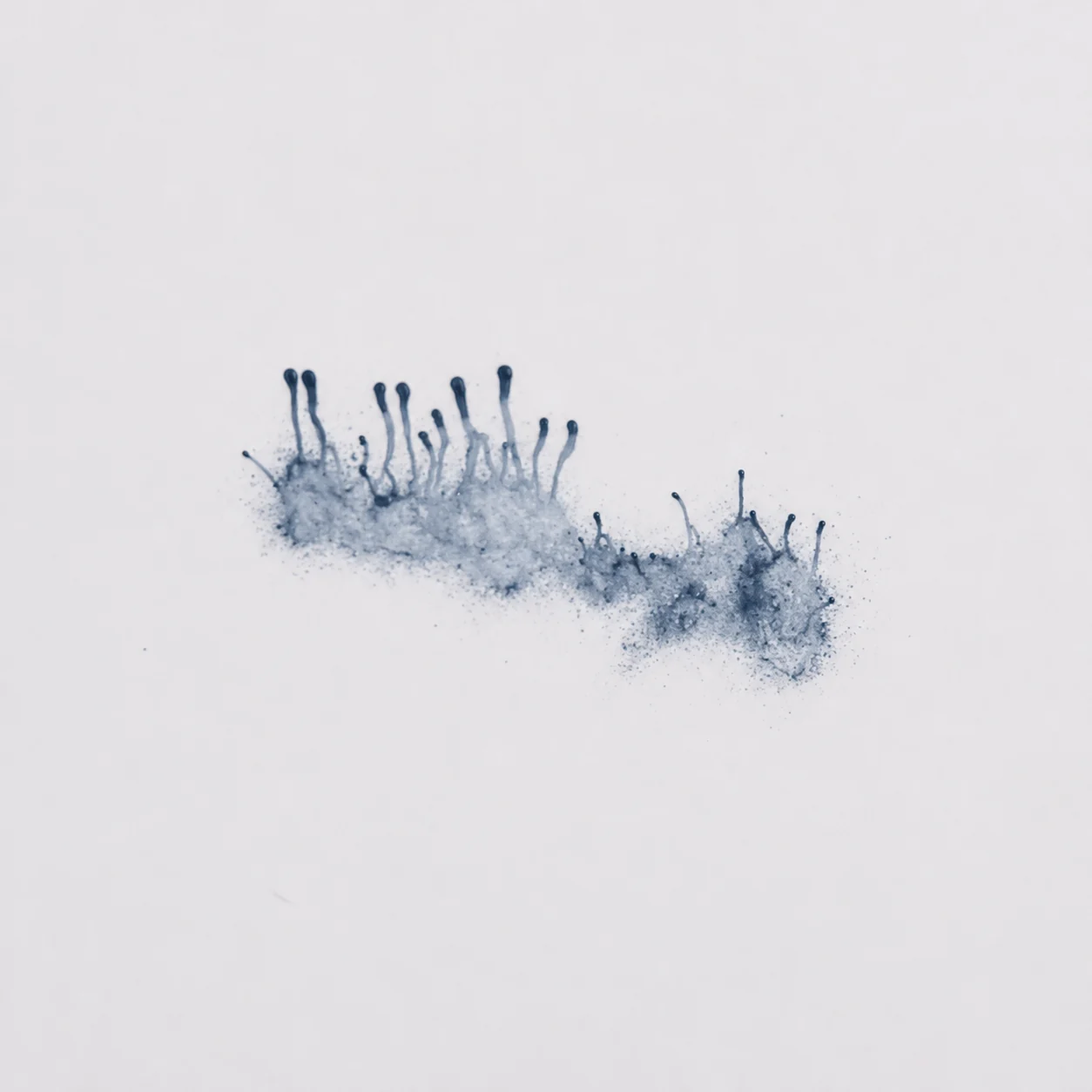
I start by pulling back less on the trigger and repeating the stroke. If the paint still spreads, I move the airbrush a little farther from the surface and try again with the same mix and pressure. If it still happens and I may have overthinned the paint, I test a fresh, slightly less diluted mix at the same pressure and distance. I change one thing per pass so I can tell which adjustment helped.
Adjust the paint mixture and working pressure one at a time so the next test tells you something useful.
When to clean or inspect the nozzle
If the quick checks don’t help, look for dried paint inside the nozzle and around its opening. Inspect the needle tip for a bend and the nozzle for a crack or a distorted opening. If you need to remove the nozzle, use the method for your design. A small threaded nozzle and a compression-fit nozzle come out differently.
If paint stops coming out altogether, switch to the guide on an airbrush that won’t spray paint. If you see bubbles rising in the cup during normal spraying, start with the guide on bubbling in the cup.